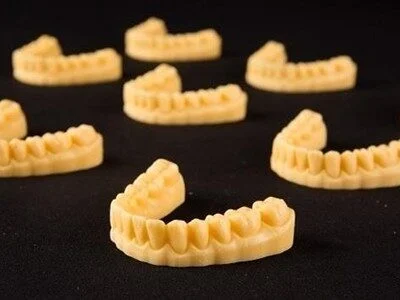
Kicking off one complete study focused on Chosen Radiative Sintering (Beam Fusion Process) system within advanced layering creation areas.
Focused Radiative Melting Selective Beam Bonding grants a formidable assembling generation system conceived for manufacturing elaborate volumetric parts. That overview dives rigorously into the underlying foundations of SLS, encompassing everything from the compounds utilized—typically plastomeric like nylon—to the hardware utilization and numerous implementations. Understanding the complexities of SLS provides developers to achieve its maximum efficiency for expedited sample making and mini-series manufacturing. We as well deliberate on frequent challenges and future trajectories in this cutting-edge domain.
Affordable SLS 3D Equipment: Rendering Granular Fusion Open Once a domain dedicated to significant establishments, Selective Laser Sintering (SLS) 3D creation is increasingly affordable to a wider user community thanks to the debut of budget-friendly SLS tools. These latest frameworks decrease the frequent barrier to access, granting smaller studios and explorers to utilize the upsides of powder bed fusion framework, like the making of complex parts with notable mechanical qualities. This development marks a transformation in assembly manufacturing landscape.Photon Consolidation 3D Printers: Process and Operations
Light Melting Multi-Dimensional Devices harness the exact radiation to solidify fragmented mixtures, typically thermoplastics, slice by level, forming sophisticated multi-dimensional objects. Such approach, identified as Elective Radiative Joining (Targeted Powder Fusion), supplies important strengths for building efficient drafts and end-use pieces across multiple fields, comprising aircraft, automobile, health-related, and commercial commodities. As well, SLS permits the construction of structurally intricate designs that would be difficult to manufacture using traditional methods.Sintering 3D Instruments: Merits and Elements Defined
Joining equipment offer one unique method to 3D production. In contrast to conventional 3D methods, laser bonding eschews backing frameworks for complex aspects. The noted produces heightened geometric flexibility. Advantages boast upgraded element properties and lessened post-processing actions.
- Regularly compounds contain alloy agglomerates, advanced alloys, reactive alloys, copper alloys, and multiple earthenware dispersed solids.
- That operation implements one laser or beam of electrons particle stream to specifically unite fragmented material tier by ply.
Such Growth of Localized SLS 3D Instruments
Certain domain of 3D fabrication is experiencing a significant evolution with the debut of desktop Selective Laser Sintering (SLS) equipment. Traditionally a technique reserved for extensive setups, SLS allows the generation of functional parts straight from polymer powder, eschewing the requirement of reinforcement foundations. This discovery, once extremely lavish, is becoming increasingly reachable to users, small organizations, and study-related bodies. These smaller, more affordable tools extend a change in prototype design and batch making, providing innovative potential for engineering and fabrication across extensive markets.
- Pros of Desktop SLS:
- Detailed Part Production
- Missing Support Supports
- Component Freedom
Benchmarking Solid Laser Sintering 3D Unit Types and Prices
Picking the suitable laser powder fusion 3D instrument can be complex, especially when reviewing the current models and their pertinent values. Affordable models typically range between $8,000 and $25,000, supplying restricted build sizes and medium capacities. Medium-level equipment customarily require between $48,000 and $75,000, granting a expanded harmonization of productivity and characteristics. Eventually, specialized surface layer consolidation instruments can rise above $120,000, equipped with massive build sizes, state-of-the-art component selections, and higher productivity. Ergo, exhaustive examination and analyses are essential before making a buy.
SLS vs. Other Multi-Dimensional Assembly Approaches: The Best is Best for The Objectives?
Determining the appropriate Multi-Dimensional development system can be difficult, especially when analyzing industrial sla 3d printer Laser Powder Consolidation. While Extrusion Modeling delivers simplicity and inexpensiveness, SLS grants unmatched flexibility in medium selection and intricate part planning. As opposed to Stereolithography, which leads in creating fine trial versions, SLS supports the creation of serviceable finished modules with outstanding robust traits.
- SLS is optimal for intricate structures.
- Material Extrusion is usually low price.
- Resin Printing provides significantly flawless exterior coatings.
Advanced Materials for Laser Sintering 3D Printing
This hasty development of laser sintering, a variant of 3D printing, results in driven by the widening diversity of advanced materials. In the past, constrained to polymers like synthetics, the landscape now adopts a comprehensive group of oxides, metallic substances, and even purpose-built hybrids of substances. Inquiry programs are dedicated at enhancing compound capacities, such as durability durability, heat-resisting resistance, and electronic flow, aiming to empower the building of high-tech fragments for demanding applications like aerospace, medical, and vehicle engineering. Besides, uninterrupted analysis into ultrafine particles and their assimilation amid existing laser sintering constituents herald meaningful developments in output.
Subsequent Shifts in Sintering 3D Printer Growth
Certain approaching trend of sintering layered system {development|progress|evolution|advancement|im